HOW INTRODUCTION OF COMMUNITY SERVICE UNDER BNS, 2023 REDUCES THE BURDEN OF INDIA'S UNDER TRIALS?
Reforms by way of the introduction of the community service under BNS, 2023
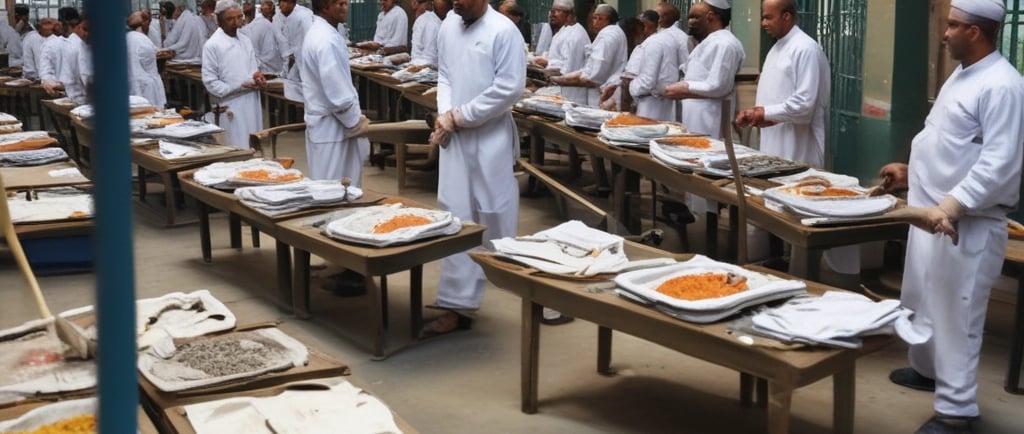
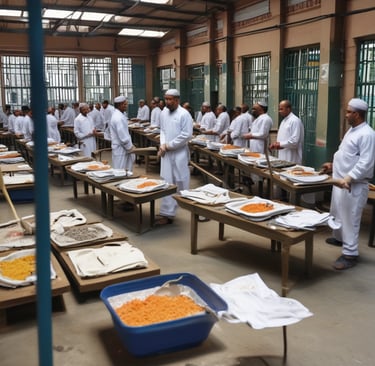
TOWARDS REFORM: THE ROLE OF COMMUNITY SERVICE IN REDUCING INDIA'S UNDERTRIAL BURDEN
Introduction:
In recent years, India’s criminal justice system has undergone significant reform, especially with the introduction of the new criminal laws – the Bharatiya Nyaya Sanhita, Bharatiya Nagarik Suraksha Sanhita, and Bharatiya Sakshya Adhiniyam. Among the notable changes, the recognition of community service as a form of punishment marks a progressive step towards a more reformative and inclusive approach to justice. This article aims to explore what community service means, how it is applied in legal systems, and its specific relevance in the Indian context. It also looks at the impact of community service on undertrial prisoners, and how this alternative to imprisonment can help address serious issues like overcrowded jails, long pre-trial detentions, and the marginalization of poor and voiceless accused persons.
By linking community service to judicial reform and prisoner welfare, this article highlights the role it can play in reshaping India’s justice system from one focused on punishment to one built on reform, rehabilitation, and human dignity.
Legal Recognition and Framework of Community Service in India
Community service, as a form of punishment, has emerged globally as a reformative and non-custodial sentencing alternative—aimed not at retribution, but at rehabilitation and reintegration of offenders into society. It typically involves directing the convict to undertake socially beneficial tasks, such as maintaining public spaces, supporting local authorities, or aiding non-profit work, in lieu of conventional imprisonment or monetary fines.
The IPC did not contain any specific provision for “community service” as a form of punishment. Sentences were largely retributive- such as imprisonment, fines, or both. No alternative sentencing mechanism like community service was formally recognized.With the enactment of the Bharatiya Nyaya Sanhita (BNS), 2023, India has formally embraced this progressive mechanism, marking a significant departure from the traditionally punitive framework of the Indian Penal Code, 1860.Statutory Provisions under the Bharatiya Nyaya Sanhita (BNS), 2023, The Bharatiya Nyaya Sanhita, which replaces the colonial-era Indian Penal Code, explicitly recognises community service as a valid form of punishment. Section 4(2) of the BNS "The punishments which may be imposed under this Sanhita are —
(a) death, (b) imprisonment for life, (c) imprisonment, (d) forfeiture of property,
(e) fine, (f) community service."
This formal inclusion elevates community service to a statutorily sanctioned mode of sentencing, allowing courts to apply it where appropriate, particularly in minor or non-violent offences.
Section 68 – Punishment for Minor Theft
"Whoever commits theft, and the value of the stolen property is not more than five thousand rupees, shall, upon return of the stolen property or payment of its value, be punished with community service or fine or both."
This provision is a practical example of how community service may be applied—especially in petty offences, reducing the burden on jails and focusing on meaningful restitution to society. Procedural Support under the Bharatiya Nagarik Suraksha Sanhita (BNSS), 2023.
Though the BNSS, 2023 (which replaces the Criminal Procedure Code) does not directly define or elaborate upon community service, it provides the procedural architecture through which such a punishment can be imposed and enforced.
Relevant sections such as those relating to sentencing powers of magistrates and summary trials will now accommodate community service as an alternative sentence. It is expected that future rules and state guidelines will clarify the manner and scope of such sentencing.
Interpretation and Judicial Usage
While community service lacked formal statutory backing before 2023, Indian courts have occasionally imposed it as part of creative sentencing in bail or probation matters. In State v. Gaurav Sharma, the court directed the accused to undertake social work as a condition for bail.
Other lower courts have ordered offenders to perform tasks like planting trees or cleaning public premises, particularly in cases involving first-time or juvenile offenders. These informal applications laid the groundwork for its formal adoption in BNS.
Community Service and Its Relevance to Undertrial Prisoners
India’s criminal justice system faces a long-standing and critical challenge — the overwhelming number of undertrial prisoners languishing in jails for prolonged periods. These are individuals who have been accused of crimes but are yet to be convicted. According to data from the National Crime Records Bureau (NCRB), over 75% of India’s prison population comprises undertrial prisoners, many of whom are incarcerated for minor, non-violent offences and are unable to secure bail due to socio-economic vulnerabilities. In this context, community service emerges as a humane and practical alternative, especially for such low-risk offenders. It offers several advantages that directly address the systemic issues faced by undertrials:
1. Reducing Overcrowding in Prisons
Undertrials, especially those accused of minor offences, contribute significantly to overcrowding. By sentencing eligible offenders to community service rather than custodial detention, the burden on India’s overpopulated jails can be eased, allowing resources to be directed toward serious and high-risk inmates.
2. Avoiding Pre-Trial Detention for Petty Offences
Often, undertrials charged with petty crimes like theft (under ₹5,000), nuisance, or minor scuffles spend more time in prison than the maximum punishment prescribed for their alleged offence. With Section 68 of the BNS now enabling community service for such offences, courts have an effective alternative that keeps individuals out of jail entirely.
3. Reformative, Not Retributive
For many undertrials, especially first-time offenders, prison can be a deeply damaging experience. Community service allows them to contribute positively to society, fostering a sense of responsibility and social inclusion. This aligns with the constitutional principle of reformative justice, prioritising rehabilitation over mere punishment.
4. Minimising Social and Economic Harm
Extended undertrial detention often leads to job loss, breakdown of families, and disruption in education or livelihood. Community service allows the individual to remain embedded in their social structure, thereby preventing long-term collateral damage — particularly important for the poor and marginalised, who make up the majority of undertrials.
5. Judicial Efficiency
Adopting community service in suitable cases reduces the pendency of bail applications, minimises time-consuming trials for trivial offences, and allows the judicial system to focus on more serious criminal matters. This contributes to greater judicial efficiency and effective allocation of legal resources. In this way, the introduction of community service in India’s legal framework is not just a legislative reform — it represents a philosophical shift in how the system views punishment, especially in relation to undertrial prisoners, who are often victims of poverty and systemic delay rather than hardened criminals.
Community Service in Official Reports, Recommendations, and Judicial Discourse
The inclusion of community service as a statutorily recognised punishment in the Bharatiya Nyaya Sanhita (BNS), 2023 did not emerge in isolation — it is the result of years of recommendations, judicial innovations, and comparative policy discussions. Several official reports, government committees, and judgments have underlined the need for non-custodial, reformative alternatives such as community service, especially for minor offences and undertrial populations. Below is a summary of key sources and perspectives that have shaped the debate:
1. Law Commission of India – 78th Report (1979)
The 78th Report on Congestion in Prisons was one of the earliest efforts to recognise the harms of overcrowding in jails and the need for alternative punishments. It explicitly recommended: “…community service, in suitable cases, may be introduced in India as a mode of punishment especially for offences not involving violence or moral depravity.” This report acknowledged international practices and urged the Indian criminal justice system to adopt a more humane approach.
2. Malimath Committee Report (2003)
The Committee on Reforms of Criminal Justice System, headed by Justice V.S. Malimath, made detailed observations regarding alternative sentencing. It noted that in minor offences, especially where the offender is a first-time convict, community service should be an available mode of punishment. The Malimath Committee strongly supported community-based corrections, citing their value in reducing incarceration and enabling social reintegration.
3. National Crime Records Bureau (NCRB)
While the NCRB does not directly measure the application of community service (as it is newly introduced), its data on undertrial prisoners and petty offences provides compelling justification:
77% of prison inmates are undertrials. A large portion is held for offences punishable with less than 7 years. Many are held simply due to inability to pay bail or fines. This systemic problem strengthens the argument for community service as an equitable and effective alternative.
4. United Nations Standard Minimum Rules (Nelson Mandela Rules)
Although not binding, these UN guidelines have been referred to by Indian courts in interpreting prison reform. They promote the use of non-custodial sentences and stress the dignity and rehabilitation of prisoners.
Rule 59 of the Nelson Mandela Rules says:
“Imprisonment should be a last resort; alternatives such as fines, community service, or supervision orders should be prioritised where appropriate.”
5. NITI Aayog and National Judicial Data Grid (NJDG)
Policy think-tanks like NITI Aayog have emphasised in their discussions on judicial reforms the need for: Decriminalisation of minor offences, Sentencing flexibility and introduction of alternate punishments like community service. The NJDG database shows a significant backlog of minor criminal cases pending across India — further amplifying the relevance of such alternatives.
6. Judicial Recognition
Although statutory recognition was delayed, Indian courts have long understood the value of reformative sentencing:
State v. Gaurav Sharma (Delhi HC, 2022)
Facts:
In this case, the accused was a first-time offender charged under a minor bailable offense involving public nuisance. During bail consideration, the court took into account the trivial nature of the offense and the accused’s background.
Held:
The Delhi High Court directed the accused to perform community service at a government institution in lieu of detention, emphasizing the restorative approaches are more meaningful for petty crimes.
Relevance:
This case is significant as it reflects the judiciary’s recognition of community service as a constructive and reformative sentencing method, especially in the absence of prior codified provisions under IPC.
State of Punjab v. Prem Sagar (2008)
Facts:
The accused had been in judicial custody for nearly two years for a minor bailable offense. The inordinate delay in trial and lack of access to legal aid led to serious concerns over unjust incarceration.
Held:
The court ordered the immediate release of the accused and recommended exploring punishments such as community service for petty offenses, noting the overburdened prison system.
Relevance:
This case demonstrated early judicial concern for non-custodial reforms and indirectly supported the eventual formalization of community service in BNS as an alternative for undertrial prisoners.
Global Practices and Comparative Perspective
The implementation of community service as a sentencing alternative has been widely adopted across several legal systems globally, often as a means to reduce incarceration rates, decongest prisons, and focus on restorative justice rather than punitive action.
1. United Kingdom
The UK is often cited as one of the pioneers in using community service orders (CSOs). Introduced in 1973, the Criminal Justice Act allowed courts to sentence certain offenders to unpaid work benefiting the community. These are now part of a broader category of “Community Sentences” which also include rehabilitation and supervision.
Under the UK model, offenders perform tasks such as street cleaning, painting schools, or working with charities. It is seen as an effective way to promote accountability while preventing reoffending.
2. United States
In the US, community service is used primarily for non-violent offenses and minor infractions, either as part of probation or as a separate sentence. Courts often assign community service to first-time offenders or in plea bargains.
However, the implementation varies significantly by state, and sometimes criticism arises when it replaces fines for the wealthy but becomes burdensome for the poor.
3. South Africa
South Africa has integrated community service as part of its Restorative Justice Programme, especially after apartheid. The goal is not only punishment but reconciliation and restoration of social harmony. The Department of Correctional Services ensures that such service includes environmental work, community infrastructure maintenance, and welfare assistance.
4. Norway and Nordic Countries
Norway, known for its rehabilitation-based criminal justice system, employs community service for various offenses. The key feature here is dignity and reform, rather than punishment. Offenders might work in elderly homes, environmental conservation, or other civic duties. These systems are supported by strong welfare states and have very low recidivism rates.
India’s Emerging Model:
India’s introduction of community service via Section 4(f) of the Bharatiya Nyaya Sanhita (BNS), 2023 is a bold step toward aligning with global norms. However, the Indian context presents unique challenges. No uniform framework yet exists for how community service will be implemented across states. Infrastructure and trained personnel to manage such programs are still in the early stages. The judiciary will have discretion, but clear guidelines will be required to ensure fairness and avoid misuse. While global models offer tested frameworks, India must design a model that balances rehabilitation, accountability, and practicality, especially in light of its large number of undertrial prisoners, prison overcrowding, and the goal of decriminalizing minor offenses.
Conclusion
The formal recognition of community service as a punishment under the Bharatiya Nyaya Sanhita (BNS), 2023, marks a progressive shift in India’s criminal justice approach — one that prioritizes restorative justice, social rehabilitation, and human dignity over retributive punishment. At a time when Indian prisons are burdened with an overwhelming population of undertrial prisoners, such alternatives can provide much-needed relief and reform.
Community service not only ensures that justice is served but also transforms punishment into an opportunity for change — allowing offenders to contribute positively to society, rather than being confined in often overcrowded and under-resourced jails. This is particularly significant for undertrial prisoners, who often remain incarcerated for long periods for minor offenses due to systemic delays.
Global practices offer valuable insights into how structured and well-monitored community service programs can lead to lower recidivism, reduced prison populations, and better reintegration of offenders. For India, this reform brings hope — but also demands robust implementation mechanisms, clear sentencing guidelines, trained personnel, and consistent monitoring.
As India moves forward, integrating community service effectively will require the coordinated efforts of the judiciary, legislature, law enforcement, and civil society. If implemented with sincerity and transparency, this reform could redefine how we view punishment — not as mere confinement, but as a path toward responsibility, reform, and restoration.
References
Bharatiya Nyaya Sanhita (BNS), 2023 – Government of India.
National Crime Records Bureau (NCRB) Reports, 2022 & 2023 – Ministry of Home Affairs, Government of India.
Criminal Justice Act, 2003 – United Kingdom Legislation (Community Sentences in UK).
United Nations Office on Drugs and Crime (UNODC) – Handbook on Alternatives to Imprisonment, 2007.
Probation and Community Sentences in the United States – Bureau of Justice Statistics, U.S. Department of Justice.
Restorative Justice in South Africa – Department of Correctional Services, Republic of South Africa.
Norwegian Correctional Services – Norway’s Model of Reintegration and Rehabilitation.
Draft Criminal Procedure (Identification) Rules, 2023 – Ministry of Home Affairs, India.
The Indian Penal Code, 1860 (before repeal) – Contextual reference for sentencing evolution.
Justice Malimath Committee Report (2003) – Report on Reforms of the Criminal Justice System.
Law Commission of India Reports – Particularly Report No. 239 on “Expeditious Investigation and Trial of Criminal Cases Against Influential Public Personalities”.